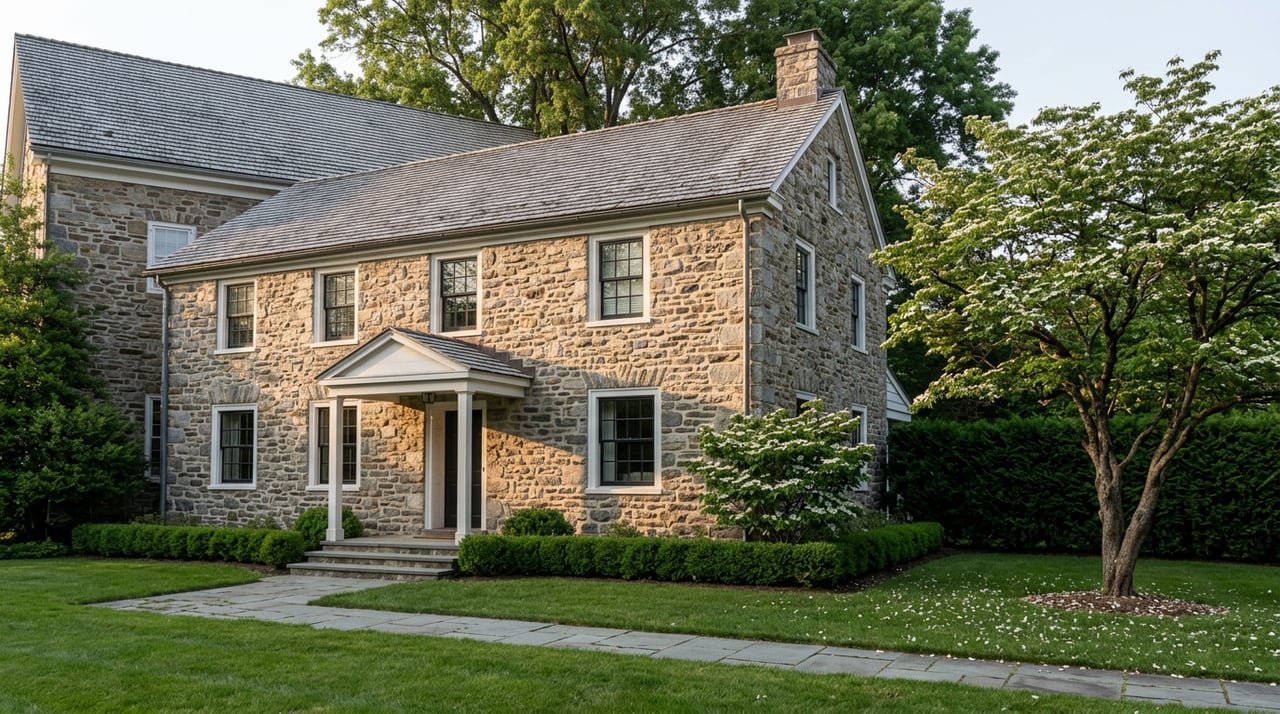
Why the Newtown Bucks County Real Estate Market Stays Tight
August 20, 2026
August 20, 2026
According to Patch, on July 28, 2026, six board members of the Newtown Bucks County Joint Municipal Authority sat down for a special meeting and voted, unanimously, to sell a piece of land almost nobody outside the township had been tracking. The 17.5 acres off Lower Silver Lake Road went to DeLuca Newtown LLC, a company believed to be affiliated with local homebuilder DeLuca Homes, for $11.5 million. That figure is not a typo or a rounding coincidence. It is the exact price the authority paid to acquire the land by eminent domain two years earlier.
Most home shoppers comparing Newtown to other Bucks County towns will never see this transaction. They will see a median price, a days-on-market figure, maybe a school district name. What they will miss is the mechanism underneath those numbers: a two-year fight over sewer capacity that just quietly resolved, and that has more to do with why Newtown real estate trades at a premium than any zoning ordinance does.
Back in 2024, the Newtown Bucks County Joint Municipal Authority, known locally as the Newtown Sewer Authority, condemned the Lower Silver Lake Road parcel with a specific goal: build its own wastewater treatment plant so it could stop being a wholesale customer of the Bucks County Water and Sewer Authority and control its own rate future. The plan drew immediate pushback from residents in Newtown Township and neighboring Middletown Township, who worried about odor, property values, and the impact on Core Creek Park and Lake Luxembourg, into which the site drains. Newtown Township's Board of Supervisors eventually withdrew its support, and the authority had to go back to court for permission to sell the land it could no longer use for its original purpose.
That is the deal that closed in late July. The land is now in the hands of a builder, and what happens to it next will run through Newtown Township's standard land development review, the same process any residential project in the township has to clear.
The authority did not condemn 17 acres on a whim. It serves roughly 9,000 customers across Newtown Borough and Newtown Township, and it has not operated its own treatment plant since the 1980s. In the meantime, it has depended on the Bucks County Water and Sewer Authority, which is in the middle of a $60 million upgrade to the Neshaminy Interceptor, the pipeline that carries the area's wastewater to Philadelphia for treatment. That upgrade has already shown up on local sewer bills.
| Quarterly minimum charge | |
|---|---|
| Before the increase | $82.00 |
| After the increase (effective January) | $120.54 |
That is roughly a 47 percent jump in the base quarterly bill for the first 10,000 gallons, tied directly to a capital project residents and buyers alike will keep paying into for years. It is a carrying cost that a median-price comparison chart will never surface, and one worth asking about before you assume a historic Newtown home's monthly costs stop at the mortgage.
Selling the Lower Silver Lake Road parcel closes the treatment plant chapter, but it does not solve the underlying capacity constraint. According to reporting on the dispute, township officials have pointed to areas like the Business Commons corridor where the lack of sanitary sewer access has actively limited the ability to attract new development. Sewer capacity, in other words, is not a background utility detail in Newtown. It is a gatekeeper for how much new housing and commercial space the township can physically add, regardless of what the zoning map allows on paper.
That gatekeeping function is a big part of why the housing stock that already exists here holds its value. When infrastructure limits new supply, existing inventory does not have to compete against a steady stream of newly built alternatives the way it might in a township with looser utility constraints.
A relocator scanning Bucks County listings might reasonably assume that anything outside a dense borough runs on well water and a septic field. In Newtown Borough and Newtown Township, that assumption is wrong. Both municipalities are served by public water and sewer through the joint authority, which is exactly why the rate increases and the treatment plant fight matter to homeowners here in a way they would not in townships further out.
Move into some of the surrounding Bucks County townships, and the picture flips. Homes there commonly rely on private wells and on-lot septic systems, which come with their own transaction friction: According to Septicandwell.com, Pennsylvania's Seller Disclosure Law requires sellers to reveal known defects in the sewage system, including its type, age, and pumping history, but the state does not mandate a septic inspection for every sale. Whether an inspection is required at all depends on the individual municipality's rules, and buyers using FHA or VA financing should expect their lender to require proof the system functions regardless of local rules. Comparing a public-utility Newtown address to a well-and-septic address twenty minutes away is not comparing like to like, and the difference shows up in far more than the sale price.
Sewer capacity is not the only structural constraint on Newtown's housing stock. Both Newtown Borough and Newtown Township maintain their own Historic Districts, each with its own Historic Architectural Review Board, and any exterior work on a structure inside one, from a new roofline to a replaced fence to repainting a sign, requires a Certificate of Appropriateness before a building permit can even be issued. A separate, shared Joint Historic Commission, made up of residents from both municipalities, reviews any application to demolish all or part of a historic structure, requiring an initial filing called a Determination of Significance before that process even begins.
None of this is disqualifying. It does mean that a buyer planning to update a historic home's exterior should budget calendar time for review, not just contractor availability.
Before you write an offer on a historic Newtown property, it is worth asking:
Put the numbers side by side and the pattern becomes clear. Across Bucks County as a whole, the median sale price over the three months ending May 2026 was $538,000, up 7.5 percent year over year, with homes taking an average of 21 days to sell. In Newtown specifically, June 2026 figures put the median list price at $1,312,500, or roughly $340 per square foot, with 137 homes sold that month, up sharply from 95 sold the same month a year earlier.
That is more than double the countywide median, and it is happening alongside a meaningful jump in sales activity, not a slowdown. A market that is both scarce and increasingly active is exactly what you would expect where sewer capacity has quietly limited how many new homes can be added and where historic district review slows the pace at which existing homes change hands and change character. The premium buyers are paying is not just for the walkable downtown or the school district. It is priced scarcity, with an infrastructure story behind it that most comparison charts leave out.
Is Newtown, Bucks County on public sewer or septic? Newtown Borough and Newtown Township are both served by public water and sewer through the Newtown Bucks County Joint Municipal Authority. Many surrounding Bucks County townships rely on private wells and on-lot septic systems, so this varies significantly once you move outside the immediate Newtown area.
Will the Lower Silver Lake Road land become new housing? The parcel was sold to DeLuca Newtown LLC, a company believed to be affiliated with local homebuilder DeLuca Homes. Any project there will need to go through Newtown Township's standard land development approval process, which had not concluded as of this writing.
Do I need historic district approval to renovate a Newtown home? If the property sits inside the Borough's or Township's Historic District, exterior changes, including new fences, signage, and alterations to a structure's facade, require a Certificate of Appropriateness before a building permit is issued. Interior renovations that do not change the exterior are handled through the standard permit process.
Understanding a town's infrastructure story is part of understanding what you are actually buying. If you are weighing Newtown against another Bucks County community, or trying to figure out what a specific historic property's renovation timeline really looks like, Philly Luxe Living can walk you through the details that don't show up on a listing sheet. Request a private consultation to talk through the market with someone who is already tracking it closely.
This article is general information, not legal, tax or financial advice. Consult a qualified professional about your situation.
Stay up to date on the latest real estate trends.

Lifestyle


3 Best Places to Go Apple Picking Near Philadelphia & Bucks County in Fall 2026
Jamie Smith Raphael, a luxury real estate agent in the Philadelphia Area with a passion for her career and clients, brings extensive industry experience, skillfully handling transactions exceeding $150 million, always prioritizing an exceptional client experience.